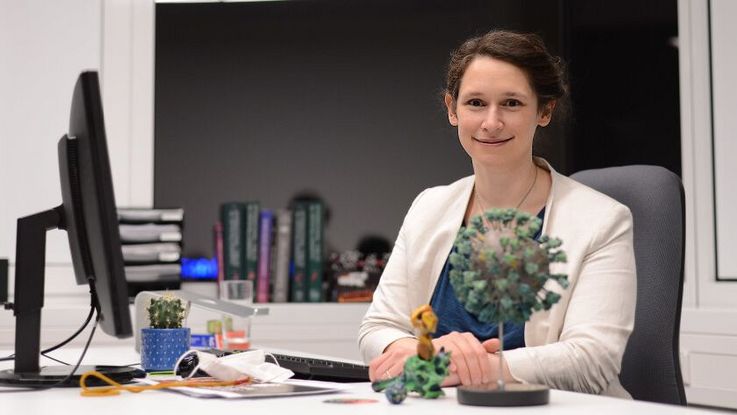
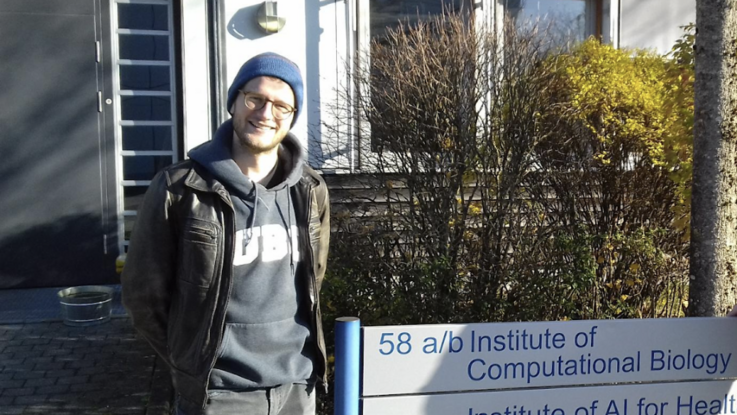
Lucy is a MD (6th year) and PhD (4th year) student in Alexander Misharin’s lab at Northwestern University (Chicago, US). Her thesis focuses on using single cell, spatial, computational pathology, and…
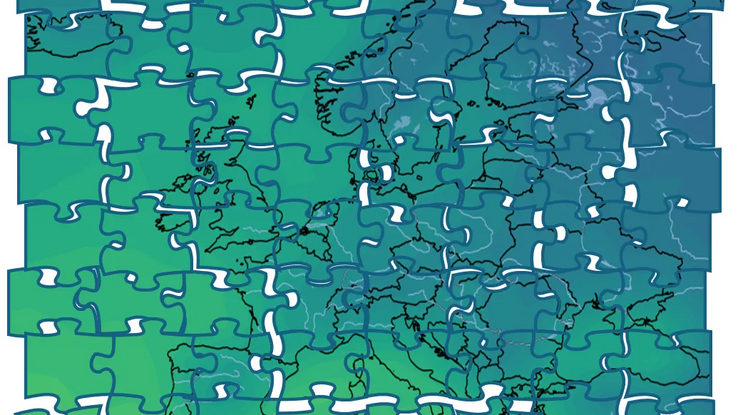
The number of scientific papers is growing so rapidly that scientists are no longer able to keep track of all of them, even in their own research area. In a current study, researchers from the…
How will artificial intelligence become a game changer for society, science, and industry? And how can we successfully transition to sustainable energy systems? With its unparalleled infrastructure…
Six partners from research and industry, including Helmholtz-Zentrum Berlin (HZB), the Fritz-Haber-Institute of the Max Planck Society (FHI), BASF, Dunia Innovations, Siemens Energy, and the Technical…
By establishing a new data and AI centre in Berlin, the Zuse Institute Berlin (ZIB) and the Helmholtz-Zentrum Berlin (HZB) are laying the foundations for a scalable and sovereign data infrastructure…
Ericsson and Forschungszentrum Jülich aim to push the boundaries of network performance and efficiency, ensuring future solutions use as little energy as possible, while delivering exceptional…
After signing Memoranda of Understanding with the University of Cape Town (UCT) and the University of the Witwatersrand (WITS) in October 2025, a CISPA delegation traveled to South Africa in February…
Will artificial intelligence (AI) become a colleague — or a competitor? As AI tools take on an increasing number of everyday work tasks, understanding how they reshape roles, collaboration, and…
Students with visual impairments often face major hurdles in their everyday student life: teaching materials are often not accessible and digital solutions are rarely sufficient. To meet these…
Although Germany is internationally at the forefront of research, the leap to marketable innovations is too rarely achieved (“European Paradox”). Decisive hurdles include funding logic that often…
Helmholtz Munich and Novartis Biomedical Research are launching a four-year collaboration to advance kidney disease research. Starting in early 2026, the partnership will work to develop an…
On March 5, Google opened its first German AI Center in Berlin. The event was attended by representatives from politics, business, and science, including Federal Research Minister Dorothee Bär,…
19 February 2026/Kiel/Warnemünde.The BRIESE Prize for Marine Research 2025 has been awarded to Dr Iason-Zois Gazis of the GEOMAR Helmholtz Centre for Ocean Research Kiel. The jury honours his…
The Helmholtz Association is launching a nationwide biomedical engineering initiative to accelerate technology development and transfer activities. Led by its established Health Centers, “Helmholtz…
From job applications to loan approvals, AI systems are increasingly being explored and deployed in decisions that shape people’s lives. But what happens when these systems learn from biased data? Can…
A new joint center for applied artificial intelligence (AI) has been founded by Karlsruhe Institute of Technology (KIT), the University of Stuttgart, and the University of Tübingen to train talented…
The CISPA-UCT Summer School “AI, Security & Privacy” will bring together students and early-career researchers from computer science, cybersecurity, and artificial intelligence in Cape Town in…
For decades, paleontologists have pondered over mysterious three-toed dinosaur footprints. Were they left by fierce carnivores, gentle plant-eaters, or even early birds? Now, an international team has…
How does better metadata drive better science? The Helmholtz Metadata Collaboration (HMC) warmly invites you to the HMC Conference 2026, taking place 28–30 April 2026 at the Deutsches…
Scientists at the German Cancer Research Center (DKFZ), Heidelberg University Hospital (UKHD), and Mannheim University Medical Center (UMM) are presenting a method that enables artificial intelligence…
Researchers at Forschungszentrum Jülich and Heinrich Heine University Düsseldorf have developed a tool that could significantly transform genome research: Helixer identifies genes directly from DNA…
A new artificial intelligence (AI) method called BioPathNet helps researchers systematically search large biological data networks for hidden connections – from gene functions and disease mechanisms…
The CP2K open-source package is among the top three most widely used research software suites worldwide for simulating the behavior of atoms and molecules. Among other applications, CP2K plays an…
Random forests are among the most widely used machine learning methods for tabular data, valued for their robustness, interpretability, and strong performance across many scientific domains. As…
With single-cell technologies, researchers can measure millions of cells in parallel and track how each one responds to specific perturbations – targeted interventions such as drug treatments, changes…
Another year has come to an end, and in December 2025 the Helmholtz AI community once again came together virtually for the Annual Retrospective and Award Ceremony to reflect on a year of remarkable…
Exoskeletons are often described as a technology of the future, yet they already ease physical strain for workers in logistics and manufacturing today. Still, wearable assistive devices do not always…
Bonn/Germany, December,17, 2025. Prof. Martin Reuter, an expert in artificial intelligence at DZNE’s Bonn site, has received three recognitions simultaneously for his work in AI-based brain imaging.…
Experts are increasingly turning to machine learning to predict antibiotic resistance in pathogens. With its help, resistance mechanisms can be identified based on a pathogen’s genetics. However, the…
At first glance, biology and computer science seem like opposites. But wherever enormous amounts of data are generated from research, progress is hardly possible without digital methods.…
The European Commission has appointed Prof. Eleftheria Zeggini, Director of the Institute of Translational Genomics at Helmholtz Munich, to the Scientific Council of the European Research Council…
Researchers at the Hopp Children's Cancer Center Heidelberg (KiTZ), the German Cancer Research Center (DKFZ), the Heidelberg Medical Faculty (MFHD) of Heidelberg University, and Heidelberg University…
Neuronal circuit models help researchers better understand how nerve cells in the brain work together and can be used computationally to advance brain research. A key step toward computational…
CISPA researcher Tẹjúmádé Àfọ̀njá co-authored a new international study that uses food as a starting point to reveal significant cultural blind spots in today’s AI systems. The study also introduces a…
A new tool developed by Helmholtz Munich and the German Center for Diabetes Research and the University of Bonn makes spatial proteomics and lipidomics easier to use – no coding required. C-COMPASS…
Health communication content created using artificial intelligence (AI) can reach people on social media more effectively and encourage more interaction than conventional posts. This opens up new…
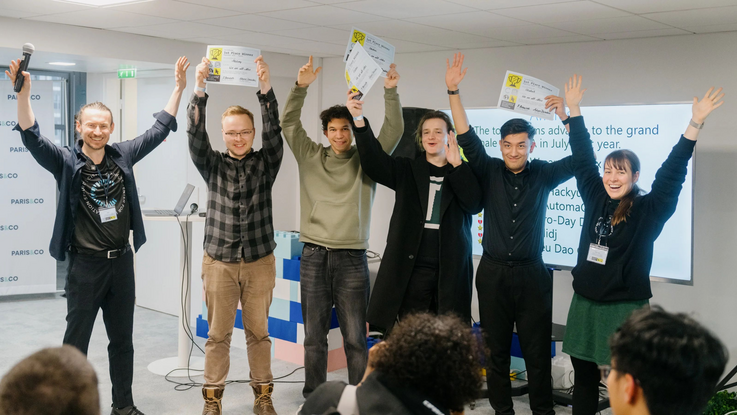
On November 22 and 23, 2025, the first regional qualifying round of the CISPA European Cybersecurity & AI Hackathon Championship took place at the Grande Arche in Paris. IT students from France and…
How can closely related mental illnesses with similar symptoms be reliably distinguished from one another? As part of a German-Chinese collaboration, researchers from Forschungszentrum Jülich and…
Helmholtz Munich has secured funding in the Helmholtz Association’s first-ever “UNLOCK” call for AI benchmarking. With three projects approved, the center plays a key role in developing high-quality,…
Air conditioning systems are ubiquitous in cities such as New York – but their actual energy consumption was previously unknown. Researchers at the Karlsruhe Institute of Technology (KIT) have now…
A research team at the Jülich Supercomputing Centre, together with experts from NVIDIA, has set a new record in quantum simulation: for the first time, a universal quantum computer with 50 qubits has…
Scientists at Helmholtz Munich, together with Harvard Medical School and international collaborators, have developed TITAN, an artificial intelligence (AI) model capable of analyzing and describing…
In just ten days, Paris will host the kickoff event of the CISPA European Cybersecurity & AI Hackathon Championship—the first in a series of five regional competitions across Europe. The idea for the…
For many people living with cancer, fatigue is an additional, often invisible burden in everyday life. Researchers at the Institute of Neuroscience and Medicine – Brain and Behaviour (INM-7) at…
Researchers at Helmholtz Munich and the Technical University of Munich (TUM) have developed Nicheformer, the first large-scale foundation model that integrates single-cell analysis with spatial…
The Helmholtz Association has selected the first projects to be funded under its UNLOCK call for benchmarking datasets, a key component in the Helmholtz agenda to support and improve the comparability…
Researchers at the German Cancer Research Center (DKFZ) have achieved outstanding success at this year's world-leading forum for medical image processing and computer-assisted intervention. Two DKFZ…
The Helmholtz-Zentrum Dresden-Rossendorf (HZDR) has achieved double success in the EU Regional Development Fund (ERDF) funding call “InfraProNet” conducted by the Saxon State Ministry for Science,…
To conclude 2025’s International Women in AI Month, we are putting the spotlight on another of our Helmholtz AI Associates who are driving innovation in AI across diverse research fields.
Artificial intelligence comes from machines – and precisely for that reason, it isn’t automatically fair. Doctoral researcher Lena Krieger works at Forschungszentrum Jülich on new methods to change…
To join this international month's celebration of Women in AI - a global initiative to highlight women’s contributions to artificial intelligence - we are putting the spotlight on one of our Helmholtz…
Prof. Dr. Zeynep Akata, Helmholtz AI lab head, has been awarded the “Future Knowledge” Prize 2025 by the German National Academy of Sciences Leopoldina and the Commerzbank Foundation. The prize will…
Promoting young talent and acting as a training ground for the next generation in the field of cybersecurity and trustworthy artificial intelligence is one of the core missions of the CISPA Helmholtz…
CISPA researcher Sarath Sivaprasad, together with Hui-Po Wang and Mario Fritz from CISPA and other colleagues from HIPS, has developed an AI system that can automatically detect abnormalities in…
A new tutorial preprint provides researchers with practical tools to apply Simulation-Based Inference (SBI) - machine learning methods that connect complex simulators with data, enabling faster and…
Scientists from the European Molecular Biology Laboratory (EMBL) and the German Cancer Research Center (DKFZ) have developed an AI model that assesses the long-term individual risk for more than 1,000…
Helmholtz Munich and Parse Biosciences have entered into a collaboration to generate one of the most comprehensive lung disease perturbation atlases to date. The project uses a human lung ex vivo…
Altuna Akalin and his team at the Max Delbrück Center have developed a new tool to more precisely guide cancer treatment. Described in a paper published in “Nature Communications,” the tool, called…
Researchers from Helmholtz Munich, Roche Diagnostics, and the Technical University of Munich have developed the most comprehensive single-cell atlas to date of human atherosclerotic plaques. These…
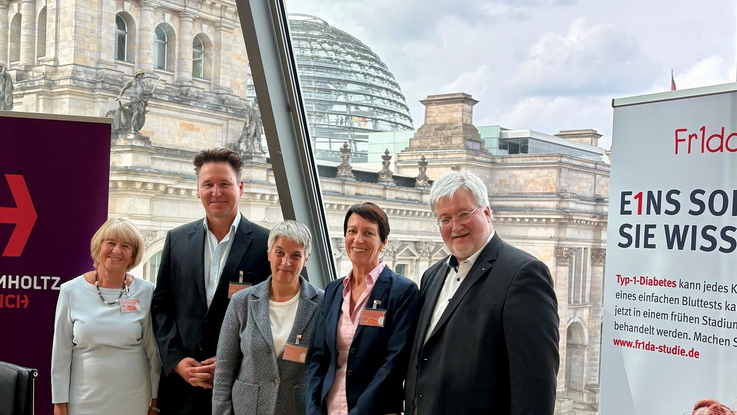
Science and politics came together once again at the German Bundestag: For the fourth time, Helmholtz Munich hosted the Helmholtz Munich Expert Hour on September 10, 2025. This dialogue format gives…
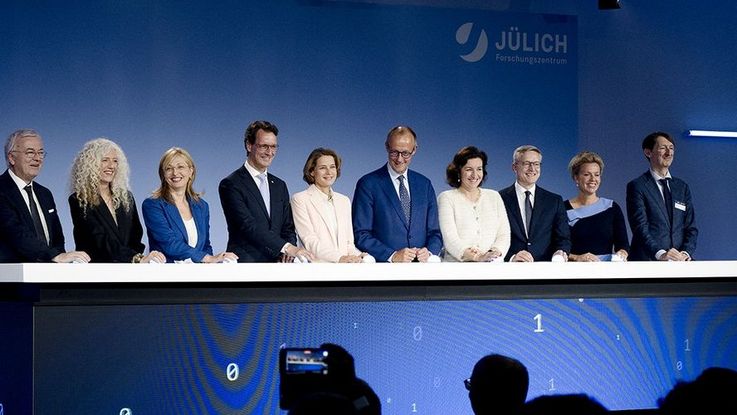
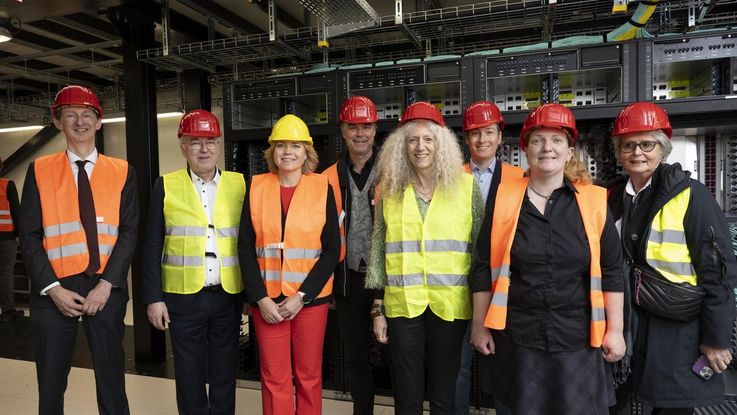
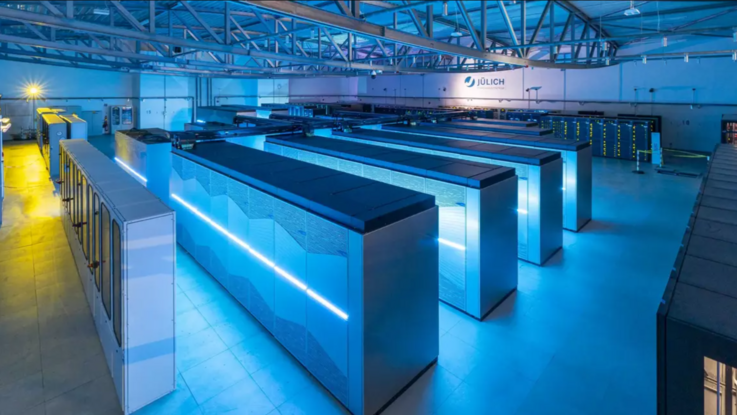
JUPITER was unveiled to the public today at Forschungszentrum Jülich in front of high-ranking guests from politics, science, and industry. The German Chancellor Friedrich Merz and the…
Prof. Niki Kilbertus, Helmholtz AI group leader at Helmholtz Munich and professor at the Technical University of Munich, has received an ERC Starting Grant for the project DYNAMICAUS, which focuses on…
As embryos develop, countless molecular mechanisms interact in intricate ways. Markus Mittnenzweig builds computational models to help decipher and predict the complex processes behind cell…
A research team at Helmholtz Munich and Helmholtz AI, led by Prof. Lara Urban, has demonstrated that artificial intelligence (AI) can be used to distinguish between living and dead microorganisms by…
Helmholtz Munich and Boehringer Ingelheim have started a research collaboration to identify new avenues for the treatment of idiopathic pulmonary fibrosis that could improve outcomes in people living…
The international science conference “Building Bridges” has become an integral part of Dresden's conference calendar. This year, the conference, organized by the Helmholtz-Zentrum Dresden-Rossendorf…
How do you program a computer that doesn’t exist yet? Researchers at the Karlsruhe Institute of Technology (KIT) are exploring this question in a new project by developing software for quantum…
Researchers at KIT and the University of Freiburg used AI to calculate how heat stress builds up per square meter in urban areas over long periods, with high spatial resolution. Cities are…
Modern AI models are powerful, but also vulnerable. They can be manipulated not only during their use but even during training by feeding them tampered data. This can lead to dangerous misjudgments.…
How can mathematics help us understand and improve machine learning? In our interview, Martin shares insights into the goals of the Conference on Mathematics of Machine Learning 2025, current…
As of July 1, 2025, Prof. Carsten Marr has assumed the newly established W3 Professorship for Artificial Intelligence in Cell Therapy and Hematology at the Department of Medicine III of the LMU…
Irene is a 3rd year PhD student in the Translational Immunoinformatics lab @Helmholtz Munich, and focuses his thesis on multimodal representation learning for single cell immunology. Gabriele is a 3rd…
In July 2025, the G6, an alliance of six leading European research organizations, released a joint position paper with concrete recommendations for shaping a European Strategy on Artificial…
Sepsis is one of the most dangerous medical emergencies. The condition is the result of a misdirected immune response to an infection, which can quickly lead to organ failure and death. Every hour…
In just a few years, what began as a scientific project—to use AI models for generating images—has become an everyday application. Along with this development, new problems have emerged. Increasingly,…
For the first time, the Helmholtz Munich Expert Hour – an established dialogue format between science and politics – took place at the Bavarian State Parliament. At the invitation of Member of…
The Helmholtz AI Consultants are dedicated to a topic that concerns researchers around the world: How can Artificial Intelligence (AI) be effectively used in science? Where are the opportunities,…
Researchers from DZNE, Ludwig-Maximilians-Universität München (LMU), and Technical University of Munich (TUM) have found that the enzyme “gamma-secretase” – implicated in Alzheimer’s disease and…
Flood forecasts using artificial intelligence (AI), the investigation of wave phenomena such as light and sound waves, and the explanatory power of mathematical models – researchers from the KIT…
Since 1 July 2025, Dr. Andrea Thorn has been setting up the new AI and Biomolecular Structures department at HZB. A biophysicist with many years of experience in AI-based tools for structural biology,…
Researchers at Helmholtz Munich received the pre-seed competition m4 Award 2025 for their project SYNTRA, which develops new methods to deliver RNA-based medicines using artificial intelligence (AI).…
Extreme weather events such as heavy rainfall are increasing worldwide – reliably assessing such events can save lives and protect property. Researchers at the Karlsruhe Institute of Technology (KIT)…
Researchers at Helmholtz Munich have developed an artificial intelligence model that can simulate human behavior with remarkable accuracy. The language model, called Centaur, was trained on more than…
Researchers from more than 50 international institutions have launched Open Problems (https://openproblems.bio) a collaborative open-source platform to benchmark, improve, and run competitions for…
A recent study shows in which areas language models are already effective in everyday medical practice and in which areas they are not. We spoke to Altuna Akalin, the study's lead researcher, about…
The Helmholtz Association has approved €30.8 million in funding for the Center for AI–Accelerated Molecular Innovations in Medicine to be located at the Max Delbrück Center. Researchers will use new…
Professor Zeynep Akata has been awarded the 2025 ZukunftsWissen Prize by the German National Academy of Sciences Leopoldina and the Commerzbank Foundation in recognition of her outstanding scientific…
How can we discover marine enzymes that have not yet been identified, which can break down plastics or capture carbon dioxide? The new research project AI MareExplore, which is being coordinated at…
Providing computing resources for scientific research – that’s the mission of Helmholtz AI Compute Resources, a Helmholtz Association initiative. The Max Delbrück Center has now joined the Karlsruhe…
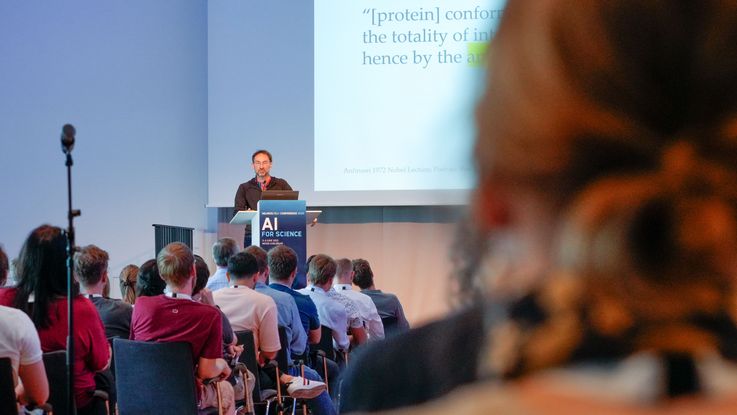
This June, Karlsruhe became the centre of scientific exchange and AI innovation as the Helmholtz AI Conference 2025 (HAICON25) brought together 400 researchers and thought leaders from across…
Computer scientist Annika Reinke from the German Cancer Research Center (DKFZ) has been awarded the Hector Foundation Prize 2025, endowed with €10,000, for her outstanding work in the field of…
Helmholtz Munich has signed a Memorandum of Understanding with Northwestern University’s (NU) Feinberg School of Medicine (Chicago, USA), one of the highest performing research-oriented Medical…
A new chapter in European Artificial Intelligence (AI) research begins with the launch of ELLIOT – European Large Open Multi-Modal Foundation Models For Robust Generalization On Arbitrary Data…
Helmholtz Munich, the Wellcome Sanger Institute, and Parse Biosciences have announced a collaboration to develop a single cell atlas focused on cancer plasticity and its response to therapies. This…
Ida Büschel is a postgrad/predoc student in Carsten Marr’s lab at Helmholtz Munich and is currently focussing on the study of twin/sister cell transcriptomes from time- and lineage-resolved…
JUPITER at the Forschungszentrum Jülich in North Rhine-Westphalia, Germany, becomes the fastest supercomputer in Europe. JUPITER, developed by the Jülich Supercomputing Centre (JSC) and owned by…
How well does artificial intelligence perform compared to human experts? A research team at HIPOLE Jena set out to answer this question in the field of chemistry. Using a newly developed evaluation…
Online symptom checkers often miss the mark. Can AI do better? Researchers from Altuna Akalin’s team at MDC-BIMSB put large language models to the test – evaluating their ability to guide patients and…
A new artificial intelligence (AI) tool, HistoGPT, is set to transform the field of dermatopathology by automating the process of generating high-quality pathology reports from histology images.…
Large language models (LLMs) – the advanced AI behind tools like ChatGPT – are increasingly integrated into daily life, assisting with tasks such as writing emails, answering questions, and even…
Data-driven research is crucial for tackling societal challenges. In a collaboration that is so far unique, Berlin's Universities of Excellence, the Max Delbrück Center, and the Helmholtz-Zentrum…
Scientists at the German Cancer Research Center (DKFZ) have shown in an international eye-tracking study that dermatologists not only improve their diagnostic accuracy by using explainable artificial…
Soroor is a 4th year PhD student in Fabian Theis lab at Helmholtz Munich. She develops deep probabilistic models for data with low signal-to-noise ratio readouts such as Perturb-seq for genetic…
Clean energy technologies hold the key to a sustainable future. Yet, the road from materials discovery to device integration is often paved with slow, manual processes, especially when it comes to…
Dr. Steffen Schneider explains the opportunities of AI in science – and why it is crucial to start the discussion in schools. With 'KI macht Schule' he brings AI literacy into the classroom.
AI-powered foundation models like GPT have evolved from everyday tools for simple tasks to powerful systems capable of revolutionizing industries. Researchers at Helmholtz Munich are harnessing the…
The Karlsruhe Institute of Technology (KIT), together with the universities of Stuttgart and Tübingen, is establishing a pioneering State Graduate Center for Applied Artificial Intelligence (LGZ) in…
Today we find ourselves in the thriving era of artificial intelligence (AI), where deep learning continues to drive groundbreaking innovations. It’s the perfect moment to revisit Gaussian Processes…
The Helmholtz Imaging Project Call 2025 is open. Submit your proposal by July 30, 2025 to receive seed funding for your collaborative, cross-disciplinary research project at the intersection of…
Are you looking for a large language model server you can use in the browser or integrate in your coding environment? Use the Helmholtz AI experimental service BLABLADOR that is part of Helmholtz…
What’s a sports car without fuel? Pretty useless – just like machine learning models without data, says CISPA researcher Antoni Kowalczuk. That’s why AI models scrape the internet for that sweet,…
The German National Academy of Sciences Leopoldina has elected Prof. Fabian Theis as a member, honoring his exceptional contributions to computational biology and artificial intelligence in biomedical…
Top scientists and companies will meet in Berlin-Buch for the 2025 Helmholtz Drug Discovery Conference from April 28-30 to discuss RNA drugs, PROTACs, AI in drug discovery, and chemoproteomics and to…
A research team from Helmholtz Munich, the Technical University of Munich (TUM) and the TUM University Hospital has developed DeepNeo, an AI-powered algorithm that automates the process of analyzing…
Henna Virkkunen, Executive Vice-President of the European Commission for Technological Sovereignty, Security, and Democracy, visited Forschungszentrum Jülich today. The focus of her visit was the…
On April 14-15, 2025, the Helmholtz Incubator Workshop once again brought together researchers, platform representatives, and strategic thinkers from across the Helmholtz Association at DESY for two…
An interdisciplinary team of experts from the Forschungszentrum Jülich, the HHU Düsseldorf and the Helmholtz AI at the Helmholtz Centre Munich has developed a new model for machine learning at the…
At Hannover Messe, KIT researchers present an open-source platform that uses AI sensor technology to transform wireless headphones from pure audio devices into intelligent wearables.
Artificial intelligence is transforming the way we conduct research, and foundation models are at the heart of this revolution. From language models like GPT to AI-driven scientific discovery, these…
The accurate prediction of enzyme function is crucial for the development of bio-based, sustainable processes and the precise interpretation of genomic data. An interdisciplinary research team from…
Max Delbrück Center and Helmholtz Imaging scientists have developed open-source software that simplifies the study of cell polarity with fluorescence microscopy. Published in “Nature Communications,”…
How can AI transform scientific research? The Helmholtz Foundation Model Initiative brought together a diverse group of experts during its first workshop. In an interview, Max Delbrück Center…
The DECIPHER-M research project uses Artificial Intelligence (AI) to further understand the spread of cancer cells based on routine clinical data. The aim is to improve treatment options using a…
They consume extremely little power and behave similarly to brain cells: so-called memristors. Researchers from Jülich, led by Ilia Valov, have now introduced novel memristive components in Nature…
On Tuesday, March 18, 2025, CISPA researchers and startups met at the European School of Management and Technology (ESMT) in Berlin with guests from politics, business and research to discuss ways to…
With the JUPITER AI Factory, a central pillar of Europe’s AI infrastructure is being established in Jülich. Start-ups, small and medium-sized enterprises, and industrial companies will have access to…
The EuroHPC Joint Undertaking (EuroHPC JU) has selected six new sites across Europe to host additional AI Factories, which are set to be deployed next year in Austria, Bulgaria, France, Germany,…
A study led by Dr. Tingying Peng, Helmholtz AI PI at the Computational Health Center at Helmholtz Munich, and Dr. Melanie Boxberg from the TUM Department of Pathology has introduced a new technology…
Helmholtz AI proudly celebrates the recognition of groundbreaking research in AI-assisted archaeology, in which our esteemed researcher Conrad M Albrecht played a key role. The study, titled "…
The National Academy of Sciences Leopoldina has awarded the 2025 Leopoldina Prize for Young Scientists to Dr. Fabian Isensee for his remarkable contributions to AI-driven medical image analysis. The…
The project FUTURE-AI aims to bridge the gap between AI research and clinical adoption in healthcare. It provides guidelines for developing trustworthy AI tools, built on six guiding principles and 30…
The National Research Center for Applied Cybersecurity ATHENE and the GSI Helmholtzzentrum für Schwerionenforschung are launching a cooperation in the fields of scientific data processing and…
Quantitative phase imaging (QPI) is a microscopy technique widely used to investigate cells and tissues. Even though first biomedical applications based on QPI have been developed, both acquisition…
Prof. Dr. Nadja Klein has been awarded the Emerging Leader Award of the Committee of Presidents of Statistical Societies (COPSS), a prestigious recognition of her contributions to the field of…
The top spots in the global race for AI technologies have already been awarded. But with clever strategies, Germany could still catch up. Michael Backes, CEO of the CISPA Helmholtz Center for…
Torrential rain and the resulting floods and inundations are among the most significant natural hazards, with severe impacts on people, nature, and infrastructure—especially in small river catchments.…
A new automated web application scanner autonomously understands and executes tasks and workflows on web applications. The tool named YuraScanner harnesses the world knowledge stored in Large Language…
The International Society for Computational Biology (ISCB) has awarded Prof. Fabian Theis the ISCB Innovator Award, recognizing his outstanding contributions to computational biology. This accolade is…
Machine learning is transforming the study of human health, offering deep insights into individual cell behavior. Building on existing knowledge that biases in machine learning can impact fairness and…
AI research in North Rhine-Westphalia (NRW) is among the best in the world – thanks in part to excellent research infrastructures such as those at Forschungszentrum Jülich. At the future conference on…
To remain competitive in today's economy, the use of artificial intelligence (AI) has become essential for companies across almost all industries. Small and medium-sized enterprises (SMEs) as well as…
Intelligent assistants and automated solutions are expected to ease everyday work, take over routine tasks, and create competitive advantages in the future. Artificial intelligence, in its various…
The Jülich Supercomputing Centre is permanently incorporating the D-Wave annealing quantum computer after three years of successful hosting and usage. It will remain a key part of the quantum…
The German Federal Ministry of Education and Research (BMBF) funds research into controlled quantum states of individual or coupled systems with its ongoing emerging talent program “Quantum Future”.…
Quantum computers promise a revolution in computing power – far beyond what is possible with traditional supercomputers. They could change the world of work in a similar way to artificial…
At the end of January, the Chinese startup DeepSeek published a model for artificial intelligence called R1 – and sent shockwaves through AI world. The model achieves performance comparable to the AI…
Do you sometimes find yourself thinking, ‘I wonder what ChatGPT has to say about this’? It has become common practice to consult artificial intelligence (AI) on a wide range of topics and problems.…
It is a milestone in computational engineering: the software 4C (Comprehensive Computational Community Code) is now available worldwide as an open-source software. Its potential: it can solve complex…
Shrimp in European supermarkets is almost exclusively sourced from farms outside the EU - often without any proof that it has been farmed in a welfare-compliant way. In the ShrimpWiz project, a…
In the future, quantum computers are expected to solve tasks that push even the most powerful supercomputers to their limit. But the world of the smallest particles is governed by its own laws. One of…
Artificial Intelligence (AI) is transforming cancer prevention: A groundbreaking study conducted at the German Cancer Research Center (DKFZ) demonstrates that AI-generated social media influencers can…
Two AI research projects at Helmholtz Munich have received prestigious European Research Council (ERC) Proof of Concept Grants. Dr. Carsten Marr’s LeukoBIAS and Dr. Janna Nawroth’s Ai4Cilia aim to…
Our bodies are made up of around 75 billion cells. But what function does each individual cell perform and how greatly do a healthy person’s cells differ from those of someone with a disease? To draw…
Eavesdropping-proof communication is essential for a connected society. Quantum physics provides the necessary foundations, enabling practical technologies such as quantum key distribution. With the…
Thanks to a new technology called Moscot (“Multi-Omics Single-Cell Optimal Transport”), researchers can now observe millions of cells simultaneously as they develop into a new organ—for example, a…
Perovskite solar cells demonstrate high efficiency in converting solar energy into electrical energy in laboratory settings. Combined with silicon solar cells, they could become the next generation of…
The Federal Ministry of Education and Research (BMBF), the Ministry of Culture and Science of the State of North Rhine-Westphalia (MKW NRW), the Ministry of Science, Research and Arts…
Steffen Schneider from the Institute of Computational Biology at Helmholtz Munich has been named the "Early Career Scientist of the Year 2024" by academics. He received this honor for his outstanding…
The EQUSPACE consortium (Enabling New Quantum Frontiers with Spin Acoustics in Silicon) has received 3.2 million euros from the European Innovation Council's (EIC) Pathfinder Open funding program to…
The Helmholtz AI community gathered online on December 11, 2024, for the much-anticipated Annual Retrospective and Award Ceremony. The event highlighted the year's achievements and recognized…
A research team led by Dr. Malte Lücken from the Institute of Computational Biology (ICB) and the Institute of Lung Health & Immunity (LHI) at Helmholtz Munich has published a guide in Nature Methods…
Perovskite solar cells are considered a flexible and sustainable alternative to conventional silicon-based solar cells. Researchers of Karlsruhe Institute of Technology (KIT) are part of an…
A new consortium consisting of ParityQC, DESY, eleQtron and the DLR Quantum Computing Initiative (DLR QCI) has successfully qualified for funding in the framework of the “Quantum Computing Funding…
A team led by Prof. Fabian Theis, Director of the Computational Health Center and the Institute of Computational Biology at Helmholtz Munich, has developed Spapros, a computational pipeline set to…
Helmholtz AI shared its expertise in consulting at KIDA-KON 2024, dedicated to advancing AI applications for food, agriculture, and environmental research. Held on December 2–3, 2024, at the Deutsches…
To meet the growing demands of high-performance computing (HPC), which is used for analyzing large datasets, conducting complex simulations, and increasingly for training artificial intelligence (AI)…
Marco, a fourth-year PhD student in the Scialdone & Hoermanseder lab at Helmholtz Munich, is on a mission to unravel the complexities of gene regulatory networks using single-cell RNA expression data…
The John von Neumann Institute for Computing (NIC) has been providing computation time on supercomputers for science and industry for more than 25 years. Up to now, the facility (based at the Jülich…
Three studies recently published within just one month by the journal Cerebral Cortex present new models of spiking networks in the brain. Electrical spikes of neurons are at the core of neural…
The High-Performance Computing Center at Karlsruhe Institute of Technology (KIT) is happy to announce a significant update to the HAICORE batch system. Managed by Slurm, this system now features two…
Humanoid robots use artificial intelligence to collaboratively solve tasks that address major societal challenges, such as demographic change. The world's first 'Robotic Coopetition' took place in…
A conversation with Prof. Andreas Keller from the Helmholtz Institute for Pharmaceutical Research Saarland (HIPS) and Prof. Yang Li from the Centre for Individualised Infection Medicine (CiiM) about…
Lung diseases, including asthma and emphysema, often preferentially affect specific regions of the lung, highlighting the need for precise drug delivery to achieve effective treatment. A team led by…
Bonn/Germany, November 26, 2024. Using artificial intelligence (AI) and accelerated measurement routines, Prof. Alexander Radbruch aims to expand the existing capabilities of magnetic resonance…
On November 25, 2024, Helmholtz Munich hosted an inspiring evening at the Bergson Kunstkraftwerk in Munich. The event, titled "Fit for the Future – How can AI revolutionize Health and Medicine?",…
The large language model of the OpenGPT-X research project is now available for download: "Teuken-7B" contains seven billion parameters and has been trained from scratch in all 24 official languages…
The jury for the Eugen Münch Award for Innovative Healthcare has announced the winners for 2024. In the category "Science and Practical Application," Dr. Carsten Marr from Helmholtz Munich was honored…
In a novel international study, researchers have created the Human Neural Organoid Cell Atlas (HNOCA), a comprehensive resource mapping the cellular diversity of human neural organoids. This atlas…
Deep Learning-Based Algorithms Can Detect Tumors – KIT Researchers Among the Best Teams in the International AutoPET Competition – Publication in Nature Machine Intelligence. Artificial intelligence…
The Falling Walls Science Summit, hosted from November 7 to 9 at the Falling Walls Science House, continues its mission of dismantling barriers in science and driving transformative change. Several …
The journey towards Europe’s first exascale supercomputer, JUPITER, at Forschungszentrum Jülich is progressing at a robust pace. A major milestone has just been reached with the completion of JETI,…
Prof. Zeynep Akata's research focuses on developing explainable machine learning models for vision and language tasks. From building an institute from scratch to fostering creativity and tackling…
Stefan Bauer is an Associate Professor at TU Munich and a Senior PI at Helmholtz AI. His publications have received multiple awards, including the Best Paper Award at the 2019 International Conference…
The German Federal Ministry of Education and Research (BMBF) is funding the new collaborative project CausalNet with nearly two million euros. The goal: to develop a new generation of machine learning…
In the QSolid collaborative project, Forschungszentrum Jülich and its partners have started operating the first prototype of a quantum computer with optimised qubit quality. It forms the basis of a…
A new computational tool called Moslin is gaining attention in biomedical research by helping scientists better understand how cells make decisions during critical biological processes like…
Professors Ivo Boneca (Institut Pasteur, Paris), Mark Brönstrup (Helmholtz Centre for Infection Research, Braunschweig), and Christophe Zimmer (University of Würzburg) have jointly been awarded one of…
The path to climate-compatible flying involves energy-efficient aircraft, low-emission engines and optimised flight paths. Digitalisation can accelerate these developments, for example by simulating…
Foundation models are complex AI applications with enormous potential. Trained on vast datasets from medicine, climate, or material science, they can uncover new relationships and make predictions.…
The Helmholtz Foundation Model Initiative (HFMI) is funding three new pilot projects to develop the next generation of powerful AI foundation models to solve complex scientific problems.…
The Helmholtz Association has announced the winners of its second Helmholtz Foundation Model Initiative call, with Helmholtz Munich playing a key role in two of the three selected projects. These…
Cancer treatment has become complex. An AI based online tool developed by researchers at the Max Delbrück Center can already help oncologists and cancer patients find the most up to date personalized…
Scientists at the German Cancer Research Center (DKFZ), together with doctors from the Urological Clinic of the Mannheim University Hospital, have developed and successfully tested a chatbot based on…
Forschungszentrum Jülich produces successful start-ups - 72% of spin-offs have already established themselves on the market. With the start-up ARQUE Systems, Forschungszentrum Jülich demonstrates how…
What opportunities lie ahead for the future of medical research and healthcare systems? Researchers from the Helmholtz Association exchange ideas with decision-makers from science, politics, patient…
Two papers that have been presented by INM-1 PhD students at this year’s International Symposium on Biomedical Imaging (ISBI) are now released at IEEE Explore.
The event, organized by ML4Earth in partnership with Helmholtz AI and the International Future Lab AI4EO, presented an important platform for advancing the role of foundation models in environmental…
Whether we are predisposed to particular diseases depends to a large extent on the countless variants in our genome. However, particularly in the case of genetic variants that only rarely occur in the…
Satellite-based Earth observation data are fundamental to climate and environmental research. In addition to their essential role in monitoring the climate, they help to assess and evaluate climate…
A team of computational biologists from Helmholtz Munich has been honored with the "Frontiers of Science" award at the International Congress of Basic Science (ICBS) in Beijing. Researchers Fabian…
Solar thermal power plants work in a very simple way: thousands of heliostats – a fancy word for sun-tracking mirrors – reflect sunlight to generate heat, which can then be used for electricity…
Prof. Ali Ertürk from Helmholtz Munich and the Ludwig-Maximilians-University Munich (LMU) has won the 2024 Falling Walls Award in Life Sciences for his pioneering research that integrates advanced…
This year's BigBrain Workshop “Challenges of Multimodal Data Integration”, organized by the Helmholtz International BigBrain Analytics and Learning Laboratory (HIBALL), brought together 120…
Led by Helmholtz Munich, scientists have developed an accessible software solution specifically designed for the analysis of complex medical health data. The open-source software called “ehrapy”…
The federal state of Schleswig-Holstein is funding the CHAI research project with a total of 900,000 euros. The project is being led by the Helmholtz Center Hereon. The partners are the Port of Kiel,…
DESY is proud to host the CERN School of Computing for the coming two weeks. It was opened on Monday by DESY and CERN research directors Beate Heineman and Joachim Mnich, Martin Thomé representing the…
What does an artificial intelligence (AI) model look like that can answer a wide variety of medical questions using radiological image data? The Human Radiome Project aims to set the gold standard.
Electricity and water supply, transport routes, social media, mobile communications and, of course, the internet: Our world is made up of networks. Billions of computers, servers, routers, sensors and…
Researchers at Helmholtz Munich have received an award from Breakthrough T1D, a leading global type 1 diabetes (T1D) research and advocacy organization, to fund a new diabetes research project. The…
In an increasingly digitalized world, information technologies and people are becoming ever more closely intertwined. The way we deal with computers and digital technologies is shaping not only the…
Three recent studies conducted with the collaboration of the Helmholtz Institute Freiberg for Resource Technology, an institute of the Helmholtz-Zentrum Dresden-Rossendorf (HZDR), show significant…
When the PSA is elevated: for which men is a biopsy necessary to confirm or rule out suspected prostate cancer? In a retrospective study, scientists from the German Cancer Research Center (DKFZ) and…
A new basic AI model will help to better understand the global carbon cycle and make predictions about future changes. The project needs one thing above all else: Lots of high-quality data from…
During the summer the Helmholtz-Zentrum Dresden-Rossendorf established the HZDR AI Lab to serve as a hub for AI research across HZDR, fostering collaboration in fields like Matter, Energy, and Health.
Researchers around Prof. Fabian Theis from Helmholtz Munich and the Technical University of Munich (TUM), have developed CellRank 2, a new tool that promises to transform the way scientists study…
Software is an integral part of scientific research, but its importance often goes unnoticed. From licences and infrastructure to user-friendliness, the multifaceted nature of software in research…
Even the best AI language learning models (LLMs) fail dramatically when it comes to simple logical questions. This is the conclusion of researchers from the Jülich Supercomputing Centre (JSC), the…
Fabian Theis, Head of the Computational Health Center at Helmholtz Munich and Chair of the Mathematical Modeling of Biological Systems at the Technical University of Munich, has been awarded a…
"Large AI systems have made tremendous progress in recent years, but now we need Bayesian approaches to make them robust and reliable enough for the use in critical application areas."
The technological progress for single-cell research resulted in an increasing amount of data, accordingly big data has become one of the central parts in medical research. “Omics” technologies do not…
For newcomers to the field of single-cell analysis as well as for experts, scientists led by Fabian Theis, Head of the Computational Health Center at Helmholtz Munich and Professor at the Technical…
Environmental scientists in Augsburg from IEM / Helmholtz Munich and the University Hospital Augsburg are now using a cutting-edge measuring device capable of detecting complex aerosols, among them…
Every year, thousands die of skin cancer in Germany. To reduce this number, three Saxon institutions are starting a promising research project: With "KI-CARs" the Fraunhofer Institute for Cell Therapy…
A team led by Prof. Fabian Theis developed HADGE, a new tool that improves the accuracy and efficiency of identifying individual donors in single-cell studies. The work, recently published in Genome…
The annual “Helmholtz AI Conference: AI for Science 2024”, held in Düsseldorf, was a landmark event for the Helmholtz Association and beyond in the field of artificial intelligence and its application…
A new paper published in Developmental Cell is the result of a collaboration between the Scialdone (Helmholtz Munich) and Srinivas (Oxford) groups. The two teams combined their respective experimental…
The "Bavarian AI Council," established by the Bavarian State Government, met on June 7, 2024, at Helmholtz Munich. The host was Prof. Fabian Theis, Director of the Computational Health Center at…
At the third Helmholtz Munich Expert Hour at the German Bundestag on June 4, 2024, the cutting-edge research center provided information on the potential of artificial intelligence (AI) and new…
DLR is researching AI-based systems for automatically recognising and understanding spoken language in air traffic control. A reduced workload can enable savings of 60 litres of aviation fuel per…
High-performance microchips are essential for the successful use of artificial intelligence (AI). The EDAI project, coordinated at Karlsruhe Institute of Technology (KIT) and funded by Germany’s…
From June 3rd to 6th, international researchers and those interested in the fields of computational neuroscience and artificial intelligence will meet at the International Conference on Neuromorphic…
Dr. Eric Schulz is the Director of the Institute of Human-Centered AI at Helmholtz Munich. The AI-expert uses foundation models to understand AI-behavior through a psychological lens. His…
Artificial Intelligence (AI) offers various opportunities in medical research, but the use of patient data frequently raises privacy concerns. In a recent position paper, Dr. Carsten Marr, a scientist…
The "High-Performance Computer Karlsruhe" (HoreKa), which has been in operation at the Karlsruhe Institute of Technology (KIT) since June 2021, is currently one of the fastest computers in Europe.…
The first module of the exascale supercomputer JUPITER, named JEDI, is ranked first place in the Green500 list of the most energy-efficient supercomputers worldwide, as announced today by…
A team led by Helmholtz Munich scientist Dr. Grzegorz Popowicz unveils the Molecular Interactions Structurally Optimized (MISATO) dataset, offering a transformative approach to training AI models for…
The German Radiological Society has awarded the Alfred Breit Prize this year to Prof. Julia Schnabel, Director at the Institute of Machine Learning in Biomedical Imaging at Helmholtz Munich and…
Researchers from the Karlsruhe Institute of Technology (KIT) and the University of Duisburg Essen have succeeded in precisely identifying affective states using the body language of tennis players…
Elucidating the relationship between the sequences of non-coding regulatory elements and their target genes is key to understanding gene regulation and its variation between plant species and…
At the WestAI service centre, NRW research institutions support companies in the development of innovative AI applications. A cooperation between Forschungszentrum Jülich and u-form publishing house…
A position paper by over 100 authors, now published in the journal Imaging Neuroscience, summarizes the development of digital neuroscience, the current status and further goals in the new research…
The German National Academy of Sciences Leopoldina honors Helmholtz AI PI and Helmholtz Munich scientist Niki Kilbertus for his teaching and research achievements in the field of ethical machine…
To mitigate the effects of global climate change, we need comprehensive knowledge about the global carbon budget, which comprises CO2 sources and sinks such as wetlands, forests, or permafrost soils.…
The Helmholtz-Zentrum Hereon is involved in two of four projects. The goal of the three-year Helmholtz Foundation Model Initiative (HFMI) is to develop fully functional models. Four pilot projects…
When one tectonic plate slides underneath another tectonic plate, strong earthquakes result rather frequently. The severe earthquake off the coast of Taiwan in early April 2024 also took place at such…
The network of excellence “ELSA - European Lighthouse on Secure and Safe AI”, which is coordinated by CISPA, met in London on March 18. At a public workshop on "Generative AI and Creative Arts",…
Together with its partner institutions within the Helmholtz Association, Forschungszentrum Jülich aims to build a new generation of AI foundation models for science. The associated pilot projects are…
In a new collaboration, the Computational Health Center at Helmholtz Munich has teamed up with the global pharmaceutical company Pfizer. The joint initiative, spanning three years, aims to leverage…
Dr. Denys Makarov from the Helmholtz-Zentrum Dresden-Rossendorf (HZDR) has been awarded an ERC Advanced Grant in the amount of 2.5 million euros. Over the next five years, this funding will enable him…
With the development of the internet, social media or cloud computing, the amount of data created worldwide on a daily basis is sky-rocketing. This calls for new technologies which could provide…
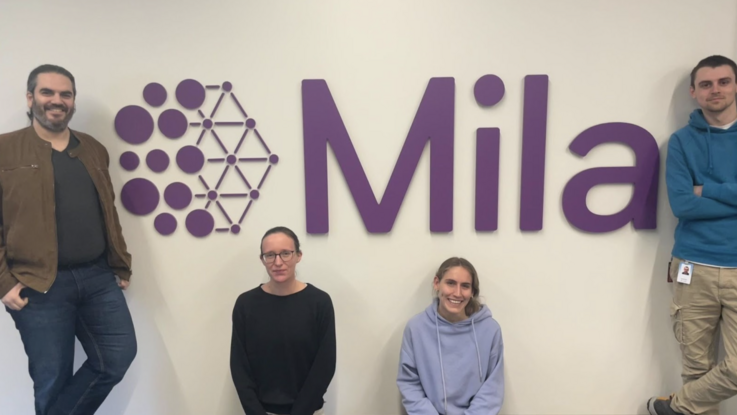
Paul Bertin is a 5th year PhD student in Yoshua Bengio’s lab @Mila (Montréal), and focuses his thesis on experimental design approaches for cell based assays. In October 2023, he vsited the…
Prof. Zeynep Akata has been heading the newly founded Institute for Explainable Machine Learning since January 2024. Her research focuses on developing explainable machine learning models for vision…
In Europe, a Large Languange model is being created, which should be more reliable, open, transparent and more energy-saving than ChatGPT. The key to...
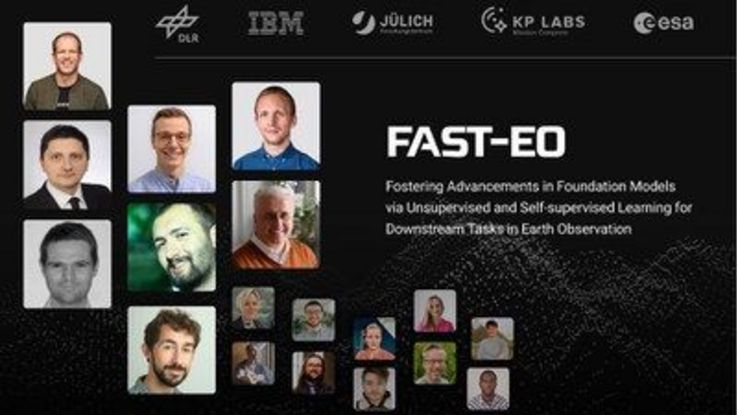
The FAST-EO project was officially launched on 5 February 2024, aiming to advance AI Foundation Models (FMs) for Earth Observation (EO). Funded by the European Space Agency (ESA), the consortium is…
Artificial intelligence is revolutionizing medicine. But doctors and developers also have to deal with the risks: The FRAIM project aims to find answers.
The development of a new theory is typically associated with the greats of physics. Researchers at Forschungszentrum Jülich have now programmed an artificial intelligence that has also mastered this…
Physicists and materials scientists can choose from a whole family of computer codes that simulate the behavior of materials and predict their properties. The accuracy of the results obtained by these…
Artificial intelligence (AI) can help dermatologists to detect skin cancer. However, many dermatologists distrust the algorithms' decisions, which they cannot comprehend. Scientists at the German…
Helmholtz Munich organized its first "Expert Hour" in the German Bundestag. With this new event format, Helmholtz Munich will regularly provide information on politically relevant health and research…
The application of artificial intelligence methods for the generation of antimicrobial peptides will be the subject of research in the Deep Optimised Generation of AntiMicrobial Peptide (DOG-AMP)…
Tandem solar cells based on perovskite semiconductors convert sunlight to electricity more efficiently than conventional silicon solar cells. In order to make this technology ready for the market,…
JUPITER will be installed at Forschungszentrum Jülich next year as Europe’s first exascale supercomputer. At the world's largest supercomputing conference, SC23, which runs from 12 to 17 November in…
The project "AI in the Loop" addresses the interaction between humans and Artificial Intelligence (AI). The focus is on the safety and reliability of AI applications, and on the question of how…
The aim of the RETIMAGER project, in which the Institute of Natural Sciences and Medicine (NM-4) is involved, is to develop a system for molecular imaging that achieves significantly improved spatial…
Artificial Intelligence (AI) is considered a key technology of the 21st century. The “ChatGPT Moment” has shown the potential in AI applications. The Federal Ministry of Education and Research has now…
"Safe AI is important because we will find AI-based systems in all areas of life in the future. This also includes areas in which high safety requirements must be met," says Prof Frank Köster,…
Music is generated by AI and you can't figure it out? Nils Bäumer from DenkSinn GmbH gives a keynote at the i2b meet-up, partly in Japanese, without knowing the language...! The associated i2b talk…
The AiChemist project has officially started in September 2023 Coordinated by Helmholtz Munich the project is an Innovative Doctoral Training Network funded with 3 million euros provided by the Marie…
In the Innovative Computational Methods research group, Dennis Duncan and Christoph Raeth at the Institute for AI Safety and Security are developing and optimising methods for hybrid reservoir…
Our health and the environment around us are profoundly intertwined. But how do air pollution and other environmental factors interact with each other and determine our health for each individual and…
Researchers at Helmholtz Munich and the Technical University of Munich have made significant progress in advancing high-resolution optoacoustic imaging for clinical use. Their innovative deep-learning…
The discussions at the Responsible AI Forum 2023 were very enlightening and once again emphasised the importance of dealing responsibly with AI. As the DLR Institute for AI Safety and Security, we…
A collaborative endeavor between computer scientists and diabetes researchers at Helmholtz Munich has yielded novel insights into the mechanisms underlying type 1 and type 2 diabetes. This…
Helmholtz Munich and the Eric and Wendy Schmidt Center at the Broad Institute of MIT and Harvard announced the launch of a collaboration to bridge a gap in health research with AI and machine…
Colorectal cancer (CRC) ranks second in leading causes of cancer-related deaths globally, according to the WHO. For the first time, researchers from Helmholtz Munich and the University of Technology…
Currently 700,000 people die every year because of multi-resistant germs, and the trend is rising. Andreas Keller from the Helmholtz Institute for Pharmaceutical Research Saarland (HIPS) explains how…
Infrastructure, tools, technologies, and processes for projects based on data and artificial intelligence (AI) methods: The Smart Data Innovation Lab (SDIL) has now compiled these transfer services in…
Additional heartbeats from cardiac chambers, so-called ventricular extrasystoles, may be associated with severe diseases. Researchers at Karlsruhe Institute of Technology (KIT) use machine learning…
The Helmholtz Pioneer Campus was officially inaugurated today under the slogan "ENGINEERING THE FUTURE OF MEDICINE". Commissioning this new state-of-the-art research facility is a significant…
Researchers developed a new method called wildDISCO that uses standard antibodies to map the entire body of an animal using fluorescent markers. This revolutionary technique provides detailed 3D maps…
The arrangement of electrons in matter, known as the electronic structure, plays a crucial role in fundamental but also applied research such as drug design and energy storage. However, the lack of a…
The project MonitorShrimp, which is making considerable strides in improving animal welfare and performance in the context of shrimp farming, is the outcome of a consortium combining the Alfred…
The International Society for Computational Biology (ISCB) annually recognizes exceptional individuals in the fields of computational biology and bioinformatics through its prestigious Fellows…
The cooperation between DDN and Helmholtz Munich has been recognized for its work in accelerating AI-driven discoveries that deliver concrete benefits to society and human health.
Human health is closely connected to the health of our environment. So far, the complex ways in which they influence each other are not fully understood. The concept of One Health recognizes this…
Can a human organ be mapped on a single-cell level to learn about the functionality of each individual cell? And can we learn how different these cells are from person to person? Helmholtz Munich…
With Propulate, we provide a software for solving optimization problems that is especially adapted to the HPC setting. It is openly accessible and easy to use. Compared to a widely used competitor…
Subscribe to our newsletter
Stay up to date with all things AI in science across the Helmholtz Association.