Helmholtz AI Project Call 2025 Awardees: Announced at HAICON26
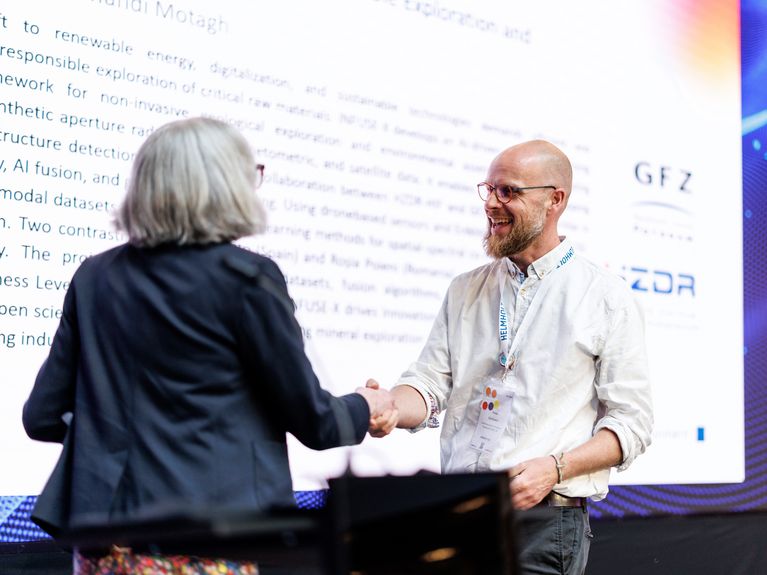
Helmholtz AI has announced the awardees of its 2025 Project Call at HAICON26: AI for Science, held 8-11 June 2026 in Munich. Eleven collaborative projects have been selected for funding, spanning the research fields of health, earth and environment, energy, matter, and information. The awarded teams bring together researchers from across the Helmholtz Association, working on some of the most pressing scientific challenges where AI can make a decisive difference.
After a highly successful application period in late 2025 with 45 submissions, Helmholtz AI has announced the awardees of its 2025 Project Call at HAICON26: AI for Science, held 8-11 June 2026 in Munich. Eleven collaborative projects have been selected for funding, spanning the research fields of health, earth and environment, energy, matter, and information, and tackling challenges across environmental prediction, structural biology, digital pathology, geological exploration, drug discovery, cell dynamics, neuroimaging, and materials science. The awarded teams bring together researchers from across the Helmholtz Association, working on some of the most pressing scientific challenges where utilizing AI can make a decisive difference. More about the projects below.
Awarded projects
AEON-UP: Adaptive Environmental Prediction System using Neural Processes for Urban Air Quality Prediction
PIs: Martin Ramacher, Erika von Schneidemesser
Centres: Helmholtz-Zentrum Hereon, GFZ Helmholtz Centre for Geosciences
Research field: Earth and Environment
Urban air pollution remains one of the most significant environmental health risks in Europe, yet high-resolution, transferable, and uncertainty-aware predictions are missing. AEON-UP develops a transferable, high-resolution AI system for urban air-quality prediction, integrating chemistry-transport model (CTM) simulations, in-situ measurements, and urban context data. The project addresses key limitations of existing ML approaches - missing pollutant-specific dispersion gradients, lack of transferability to other urban areas, and absent uncertainty estimates - by advancing Neural Processes (NPs) for multi-modal environmental data. AEON-UP will first train an NP model on physically consistent CTM fields for NO2, PM2.5 and ultrafine particles (UFPs), then refine it using unique, high-quality measurement datasets, enabling uncertainty-aware 100 m predictions for any European city. A dedicated data loader, benchmark datasets from earlier ML downscaling work, and a robust evaluation framework ensure reproducibility and transferability. The project brings together the strengths of Hereon (CTM and ML downscaling), RIFS (UFP expertise and networks, ML) and Helmholtz Munich (probabilistic deep learning). All components will be openly released to support uptake by research, policy, and municipal actors. In doing so, AEON-UP will improve exposure and health assessments, strengthen evidence-based air quality policies, and advance trustworthy environmental AI within Helmholtz and beyond.
GAINMR: Beyond Static Structures: A Generative AI Framework for Inferring Protein Conformational Plasticity from NMR data
PIs: Iva Pritisanac, Michael Heinzinger
Centres: Helmholtz Munich, Forschungszentrum Jülich
Research field: Health
AI has transformed structural biology, with methods such as AlphaFold enabling atomically accurate predictions of protein structures. However, proteins populate ensembles of interconverting conformations that current AI methods largely overlook. GAINMR proposes a generative AI framework that explicitly learns the relationship between protein structures and conformational dynamics by pairing experimental data from nuclear magnetic relaxation (NMR) spectroscopy with molecular dynamics (MD) simulations. The project will repurpose a pretrained, flow-matching protein folding architecture to predict atom-specific, structurally sensitive NMR chemical shifts from an input protein structure and protein language model embeddings. Training data comes from the Biological Magnetic Resonance Bank, with more than 10 million atom-chemical shift pairs. The team will annotate clustered MD ensembles with predicted shifts to refine the forward model and enable an inverse model that reconstructs ensembles from shifts. Further, the project will integrate NMR measurements of protein dynamics to steer generation toward lowly populated conformations. The framework will be validated on new NMR datasets, including AI designed proteins, and benchmarked for generalization and memorization stress tests. By unifying NMR observables, MD ensembles, and PLM-informed structural priors, the approach targets fast, data-efficient modeling of protein ensembles and dynamics to accelerate research across protein science.
DEEP-SCOPE: Deep Spatial Omics at Single-Cell Resolution
PIs: Peter Horvath, Fabian Coscia
Centres: Helmholtz Munich, Max Delbrück Center for Molecular Medicine
Research field: Health
Spatial omics technologies are transforming biomedical research but remain limited by a trade-off between spatial resolution and molecular depth. DEEP-SCOPE (Deep Spatial Omics at Single-Cell Resolution) aims to overcome this barrier by developing an AI-powered digital pathology framework that reconstructs tissue-wide, single-cell proteomic maps from a minimal number of spatial measurements. The project integrates advanced microscopy, cellcentric foundation models, and ultrasensitive proteomics to achieve true single-cell proteome resolution across entire tissue sections. A novel AI-guided selection algorithm will identify representative multicellular niches for deep profiling, enabling molecular reconstruction of every individual cell in the tissue. DEEP-SCOPE will be validated in a clinical application on BRAF-mutant ameloblastoma, providing new insights into mechanisms of therapy resistance. The project combines the complementary expertise of Helmholtz Munich (AI4Health) and the Max Delbrück Center, uniting world-leading competencies in computational pathology and spatial proteomics. By delivering scalable, cost-effective, and discovery-driven single-cell molecular mapping, DEEP-SCOPE will establish a transformative platform for translational research and precision oncology within the Helmholtz ecosystem and beyond.
INFUSE-X: Intelligent Multimodal Fusion for Sustainable Exploration and Environmental Assessment
PIs: Richard Gloaguen, Mahdi Motagh
Centres: Helmholtz-Zentrum Dresden-Rossendorf, GFZ Helmholtz Centre for Geosciences
Research fields: Energy, Earth and Environment
The global shift to renewable energy, digitalization, and sustainable technologies demands efficient and environmentally responsible exploration of critical raw materials. INFUSE-X develops an AI-driven multimodal sensing and fusion framework for non-invasive geological exploration and environmental assessment. By integrating hyperspectral, synthetic aperture radar (SAR), magnetometric, and satellite data, it enables precise mineral mapping and subsurface structure detection. This Helmholtz collaboration between HZDR-HIF and GFZ combines expertise in sensor technology, AI fusion, and geoscientific modeling. Using dronebased sensors and EnMAP satellite data, INFUSE-X generates multimodal datasets to develop machine learning methods for spatial-spectral co-registration, fusion, and anomaly detection. Two contrasting sites, Rio Tinto (Spain) and Roșia Poieni (Romania), validate method robustness and transferability. The project delivers open-access datasets, fusion algorithms, and software, advancing the Technology Readiness Level of AI-supported exploration. INFUSE-X drives innovation aligned with Helmholtz AI goals of collaboration, open science, and sustainability, transforming mineral exploration into a smarter, cleaner, data-driven discipline supporting industry and environmental stewardship.
GNN-NP: Bridging Genomics and Metabolomics with Graph Neural Networks for Natural Product Discovery
PIs: Alexey Gurevich, Olga Kalinina, Rebekka Burkholz
Centres: Helmholtz Centre for Infection Research, CISPA Helmholtz Center for Information Security
Research fields: Information, Health
Antimicrobial resistance poses a critical global health challenge that can only be addressed by refuelling the antibiotic discovery pipeline with novel candidate compounds. Natural products – secondary metabolites produced by microbes or plants – remain the richest source of antibiotics and other drugs. Yet connecting their genomic origins to their chemical structures remains a major unresolved problem impeding the discovery of new pharmacologically relevant compounds. In this collaborative project, we aim to develop AI models that link biosynthetic gene clusters (BGCs) encoding natural product biosynthesis in microbial genomes with their expressed compounds through tandem mass spectrometry (MS/MS) fragmentation data. Combining expertise in microbial genomics and metabolomics (HIPS) with advanced graph neural network architectures (CISPA), we will explore domain-informed fine-tuning strategies for sparse and heterogeneous datasets. Our approach leverages recent advances in representation and transfer learning to build robust and generalizable models. The resulting framework will bridge genome-encoded biosynthetic potential and observed metabolomic diversity, enabling the prediction of new bioactive structures and accelerating AI-driven natural product discovery within the Helmholtz community and beyond.
XCCD: Align, Explain, Perturb: transformer based framework for causal cell dynamics
PIs: Maria Colomé-Tatché, Emmanuel Saliba
Centres: Helmholtz Munich, Helmholtz Centre for Infection Research
Research field: Health
Single cell measurements are revolutionizing the way we study biological processes. In particular, they provide great opportunities to study dynamical systems, such as infection progression or cell differentiation. So far, methods mainly focus on description or prediction, without emphasizing causality and explainability, which are the crucial characteristics of interpretable and translational models. Here we propose a model called Align-ExplainPerturb: a transformer-based framework to study causal cell dynamics using single-cell multiomics data. First (WP1) we will build a label-free manifold alignment method that joins single cell multiome (ATAC+RNA) with scSLAM-seq (RNA + nascent RNA) data. The method will produce a map between the cells profiled in the two experiments to build a triple omic data set. Second (WP2), we will use a permutation invariant transformer to study infection dynamics. The transformer will be fed with molecular tokens, small feature vectors for each cell and gene consisting of gene expression, nascent RNA abundance, promoter and regulatory element openness. The attention mechanism will point out what are the driving features of the dynamic turning points. To prove the actual causality predicted by the model we will (WP3) apply Perturb-seq to mutate the genes that result from WP2 explanations. Overall, our proposal marks a significant improvement in the field by moving the focus towards interpretability and causality.
OMIX-IMAGE: Virtual Cell Simulator: Generative Multi-Modal Integration of Omics and Imaging
PIs: Ozgun Gokce, Ali Maximilian Ertürk
Centres: DZNE German Center for Neurodegenerative Diseases, Helmholtz Munich
Research field: Health
OMIX-IMAGE will build a generative AI framework that predicts cellular morphology and dynamics directly from molecular data. By integrating transcriptomic, proteomic, and imaging modalities, it will establish a unified latent space linking gene and protein programs to structural phenotypes. Aim 1 couples spatial transcriptomics with electron microscopy (STcEM, Gokce) to train a diffusion-based model that reconstructs ultrastructure from gene expression. Aim 2 extends this to 3D using DISCO-MS (Erturk) spatial proteomics to generate volumetric tissue reconstructions. Aim 3 adds dynamics through CellDiscoverAI, integrating live imaging, Cell Painting, and MERSCOPE to infer time-resolved cellular states. The outcome will be a scalable platform transforming static molecular data into predictive simulations of structure, function, and phenotype. OMIX-IMAGE will release an open Virtual Cell Atlas, a generative modeling toolkit, and a translational biomarker-assay concept, uniting the strengths of DZNE Bonn and Helmholtz Munich to pioneer digital cell biology within Helmholtz.
MLGREEN: Machine Learning Green Functions for Magnetic Materials and Spintronics
PIs: Attila Cangi, Stefan Blügel
Centres: Helmholtz-Zentrum Dresden-Rossendorf, Forschungszentrum Jülich
Research field: Matter
Accurate electronic-structure prediction is essential for designing next-generation materials and quantum technologies. The Korringa–Kohn–Rostoker (KKR) Green-function method provides a powerful foundation for this task, particularly for complex, non-periodic systems such as magnetic heterostructures, quantum devices, and battery interfaces. However, its cubic computational scaling limits simulations to only a few hundred atoms, preventing realistic modeling of nanoscale materials. MLGREEN aims to overcome this barrier by integrating machine learning with first-principles theory to achieve a breakthrough in scalability. Building on the successful MALA framework, we will train neural networks to predict the energy-resolved Green function from local atomic environments, reducing computational cost to linear scaling. MLGREEN will deliver: (1) a validated ML model and FAIR data set, (2) an open-source software package integrated into MALA, and (3) a highimpact scientific demonstration. This project will enable KKR-level simulations for more than thousands of atoms, opening new research frontiers in magnetism, spintronics, and materials discovery.
SCALE.FM: Multi-Scale Foundation Models for Precision Neuroimaging
PIs: Martin Reuter, Stephanie Kullmann
Centres: DZNE German Center for Neurodegenerative Diseases, Helmholtz Munich
Research fields: Information, Health
This project develops novel AI methods for resolution- and modality-adaptive neuroimaging by innovating Voxel Size Independent Neural Networks (VINNs) and extending them into foundation models (VINN4FM). We integrate learned interpolation and transformer-based fusion for anatomically precise, robust segmentation across resolutions and modalities. Our core application is high-resolution neuroimage segmentation of hypothalamic nuclei and choroid plexus, enabling new insights into insulin resistance and associated metabolic and cognitive dysfunction. The project unites expertise in deep learning and neuroimaging, ensuring both methodological innovation and translational impact. Final tools will be accessible via the popular and award-winning open-source framework FastSurfer. VINN4FM thus closes the loop between AI method development and biomedical translation, providing a technically robust and openly available foundation for high-resolution, generalizable brain segmentation that directly supports future advances in neuroscience, metabolism, and medical research.
LIVR: Learnable Implicit Volumetric Representations for High-resolution 3D Images
PIs: Klaus H. Maier-Hein, Tak Ming Wong
Centres: DKFZ German Cancer Research Center, Helmholtz-Zentrum Hereon
Research fields: Information, Health, Matter
Modern 3D imaging in materials science and biomedicine produces volumetric data at micrometer and even nanometer scale, often reaching billions of voxels per sample. This overwhelms current deep-learning-based data analysis pipelines. Patching, slicing, and strong downsampling remain common but break spatial continuity, remove volumetric context, or blur subtle geometric cues that define cracks, vessels, and tissue microstructure. These artifacts undermine the reliability of downstream tasks and limit the scientific value of high-resolution data. We address this with two complementary deep learning methods. Implicit Neural Representations (INRs) encode each volume as a continuous function whose weights compactly capture structure, allowing learning without operating on full grids. Independently, a dynamic token Transformer learns to focus representational capacity by selecting the most informative tokens under limited memory and computation. We then integrate both strands into an INR-conditioned encoder that maps INR weight space to task ready tokens and focuses attention on the components that carry the strongest structural signal. We evaluate these learning approaches on key tasks across radiological and synchrotron CT datasets. The modular design yields strong standalone components and a unified model in the final stage. The expected outcomes are compact and robust representations that preserve spatial fidelity and enable scalable analysis of large volumetric data.
AIRE: Artificial Intelligence in REcycled Aluminum
PIs: Peter Steinbach, Guido Juckeland
Centres: Helmholtz-Zentrum Dresden-Rossendorf, Helmholtz-Zentrum Berlin für Materialien und Energie
Research fields: Matter, Energy
Aluminum recycling, despite its prominence, is hindered by contaminating metals that form detrimental intermetallic compounds (IMCs) during remelting. Accurate quantification of IMC type, morphology, and distribution is crucial for designing recycling-friendly alloys, yet current synchrotron X-ray tomography methods struggle to differentiate between similar IMC phases. This project addresses this limitation by developing a novel, weakly-supervised deep learning pipeline for automated 3D volumetric semantic segmentation of IMCs. Leveraging a unique Helmholtz consortium, combining access to synchrotron facilities (HZB), highperformance computing (HZDR), and an industrial partner (Novelis), we will overcome key challenges in 3D image analysis, including low contrast, complex network structures, and scalable annotation. Our approach will use a memory-efficient 3D model trained on a large, existing dataset (~200,000 volume tiles) with sparse labels, enabled by explainable AI and contrastive learning. Successful implementation will reduce annotation effort, provide quantitative insights into IMC characteristics, and support a circular aluminum economy. Beyond aluminum recycling, this methodology will create a broadly applicable open-source toolbox for 3D image segmentation, with potential impact in fields such as materials science, geoscience, and biomedical imaging, and lay the foundation for future development of a volumetric 3D foundational model for scientific image data.
We are empowering minds across the Helmholtz Association - ready to see your project on the list? The 2026 Project Call opens this August - stay in the loop by keeping an eye on our Project Call page, via our LinkedIn page, or via our newsletter here.
