Helmholtz Munich Launches M1 Clinical AI Consultants to Bring AI Research to Patient Care
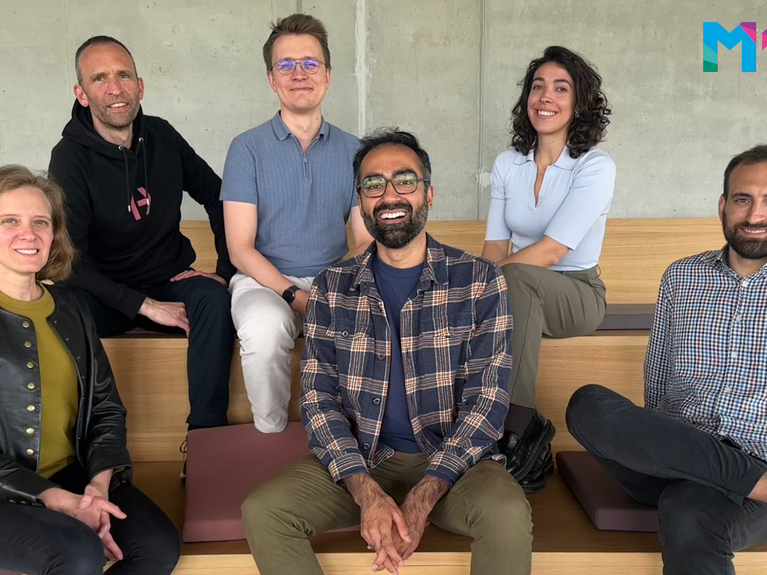
A new interdisciplinary team at Helmholtz Munich aims to bridge one of healthcare AI's longstanding challenges: translating promising algorithms into tools that perform reliably in clinical practice. The M1 Clinical AI Consultants, based at the Institute of AI for Health (AIH), were established to support healthcare professionals in transforming preclinical computational approaches into validated, deployable clinical solutions.
Bringing together experts in medicine, artificial intelligence and ethics, the team builds on more than seven years of consulting experience gained throughout Helmholtz AI’s established network of scientific AI consultants. Co-led by Prof. Carsten Marr, director of the Institute of AI for Health, and Dr. Marie Piraud, who also heads the Helmholtz AI Consultant Team for health research, the group works alongside clinicians throughout the full project lifecycle, from the initial concept through validation and prospective trial design. The objective is not merely to develop functional AI models, but to evaluate them in real-world clinical settings. Depending on the project and its outcomes, results may lead to scientific publications, open-source software, or direct clinical testing.
Alongside AI and data science experts, the team includes an embedded AI ethicist, and a medical doctor. The team is tied closely to leading TUM and LMU AI and ethics leaders such as Prof. Alena Buyx, Prof. Daniel Rückert and Prof. Bjoern Eskofier. Taken altogether, this combined expertise helps ensure that ethical, regulatory, and clinical considerations are reflected appropriately throughout the development process.
-
The service is free of charge for clinicians, and project submissions are now being accepted.
-
Contact:clinical-ai@helmholtz-munich.de
→ Submit a project
→ To their website

We spoke to the team to learn more about their work - find the full interview below.
A small fraction of medical AI research ever reaches clinical practice. What are the most common reasons promising tools fail to make the transition?
Only a small fraction of medical AI research reaches clinical practice because the path from development to deployment is not paved. Clinical AI integration is relatively new, and best practices are still evolving. Challenges such as limited generalizability across patient populations and data drift over time make real-world deployment complex and require continuous, prospective evaluation. This can be approached with “silent trials”, where algorithms are run in the background alongside existing clinical workflows to assess performance without influencing decision making. However, even for certified medical AI products, prospective clinical evaluation frequently does not exist [2]. In addition, successful implementation depends heavily on seamless integration into clinical workflows, as well as compliance with strict data protection regulations and access controls. Limited availability and fragmentation of clinical data remain crucial obstacles. Together, these factors make it extremely difficult to develop interoperable and clinically robust AI systems, particularly for clinicians who are pursuing innovation alongside their demanding day-to-day clinical responsibilities.
Clinicians rarely have time to pursue technical side projects. How do you make participation low-friction enough to work?
We recognize that clinicians have very limited time to pursue innovation alongside their demanding clinical responsibilities. That is why we have designed our collaboration model to be as practical, structured, and supportive as possible. Every project begins with a comprehensive intake process, during which we work closely with clinical teams to understand their specific challenge, local workflows, available resources, and data landscape. This ensures that any solution we develop is not only technically sound, but also tailored to the realities of the clinical environment it will be built for.
As a Munich-based team, we place great value on personal exchange. We meet with clinical partners on site whenever possible, to build a shared understanding of the problem, align expectations, and define the path forward as a team. Our support spans the entire project lifecycle—from study and project design, data assessment, and ethics applications to algorithm development, validation, and prospective evaluation in real-world settings. We see AI development as a collaborative process rather than a top-down technology transfer exercise. We work alongside clinical teams as partners, sharing knowledge and building local expertise throughout the project. By involving the people who will ultimately use and benefit from these solutions, we aim to create AI algorithms that are not only innovative, but also trusted, practical, and ready for clinical impact.
What makes the Clinical AI Consultants unique?
Many clinicians already have excellent ideas for how AI could improve patient care and clinical workflows. The challenge is often not building an initial algorithm, but transforming it into a robust, validated solution that can be expected to perform well prospectively. Our role is to complement the expertise that already exists within healthcare institutions. With extensive experience in AI-driven health research and access to a broad scientific network, including endorsement by the M1 Munich Medicine Alliance and close scientific collaborations with TUM and LMU, we bring specialized expertise in model development, validation, ethics, and clinical implementation. Our service is free of charge for clinicians, so collaboration is easy to initiate.
By combining clinical insight with technical and methodological expertise from our Helmholtz AI consulting expertise, we help accelerate the path from promising idea to clinical impact. Our focus is not just on developing algorithms, but on ensuring they can be successfully integrated, prospectively evaluated, and ultimately benefit patients.
Related articles
[1] Show us the evidence for the value of medical AI. Nat Med 32, 1163 (2026). https://doi.org/10.1038/s41591-026-04389-4
[2] Chouffani El Fassi, S., Abdullah, A., Fang, Y. et al. Not all AI health tools with regulatory authorization are clinically validated. Nat Med 30, 2718–2720 (2024). https://doi.org/10.1038/s41591-024-03203-3